
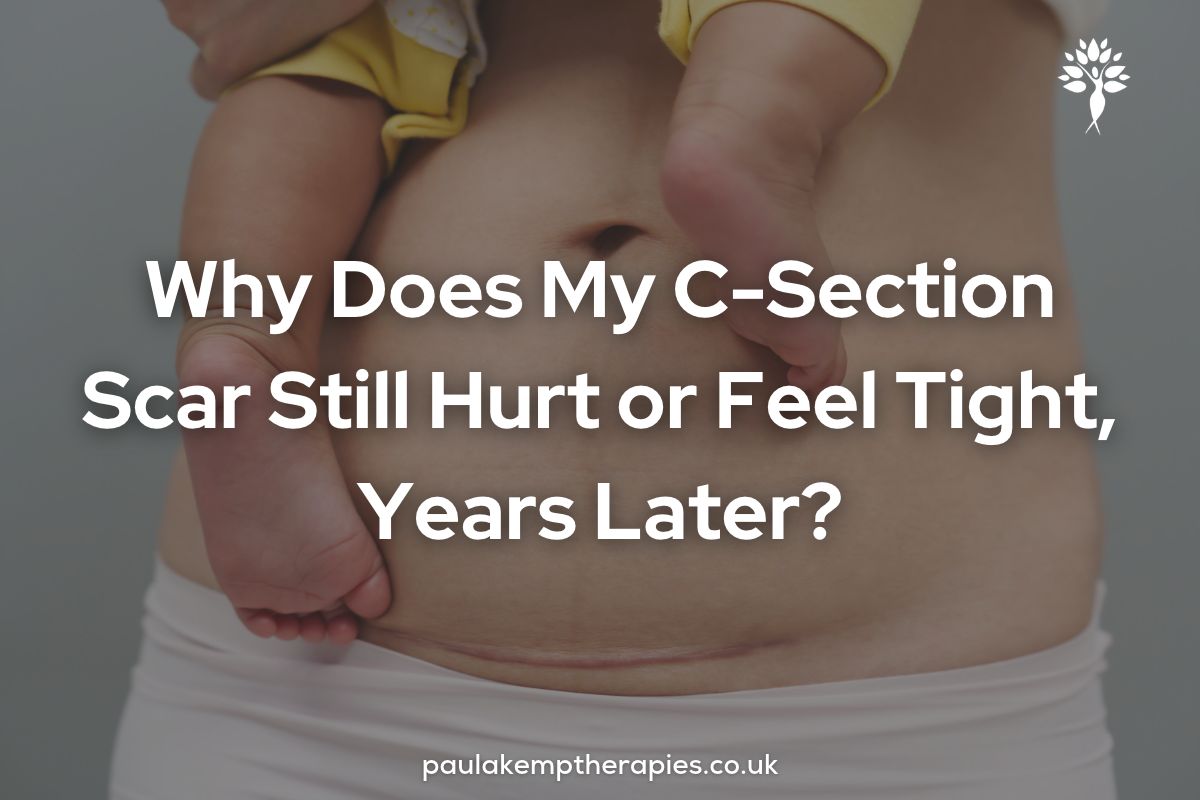
If your C-section was years ago and your scar still aches, pulls, feels numb, or catches you off guard when you move a certain way, you’re not imagining it, and you’re not the only one. It’s one of the questions I hear most often in clinic, usually from women who assumed that once the scar looked healed on the outside, that was the end of the story.
I’m a Restore Caesarean Scar Specialist, and here’s what I want you to know before anything else: it isn’t too late to do something about it, however long ago your C-section was.
Is it too late to do anything about it?
If you’ve just had a baby, the last thing you need is another deadline to worry about. The truth is more forgiving than that.
Yes, you can usually start scar massage around 6–8 weeks post-birth, once the skin is fully closed with no stitches or staples, no scabbing or open areas, and no signs of infection. I’ve written a fuller timeline here if you want to check exactly where you stand.
But it’s genuinely never too late, whether that’s six months, three years, or the scar pain years later that brought you here today. I’ve worked with women 6 months post-C-section, 3 years post-C-section, and even 10 or more years after birth, and they still felt real benefits. Scar tissue can soften. Sensation can improve. Bodies start to feel more like their own again. So if you’re further along than you’d like to be, you haven’t missed anything. Healing doesn’t come with a deadline.
If you’re planning more children, it can feel like whatever you do now will just be undone again. It won’t. Supporting your current scar can make a future birth and recovery smoother, less tightness can mean better surgical access, softer tissue can mean easier healing afterwards, and better body awareness can mean more confidence during pregnancy and recovery. Giving your current scar some attention now helps you go into your next birth better prepared, physically and emotionally.
Why does a scar that looks healed still feel wrong underneath?
Your C-section scar isn’t just on the surface. It goes through several layers, skin, fat, fascia, muscle, and the uterus itself. The skin might close up within a couple of weeks, but the deeper tissue can take much longer to heal, and doesn’t always do so neatly. If you’re still in those early weeks, my guide to what to expect as your scar heals covers this in more detail.
Scar tissue can become sticky and restrictive. It might pull, ache, or feel numb, and for some women it can affect posture, digestion, or pelvic floor function. A scar can look fine on the outside and still feel uncomfortable underneath, and that matters.
What if my scar doesn’t hurt, but something still feels off?
Pain gets all the attention, but its absence doesn’t always mean everything underneath is functioning as it should. Many women feel nothing at all around their scar. That numbness isn’t unusual, it happens when nerve endings are disrupted during surgery and don’t fully reconnect.
Even without pain, you might notice tingling or burning, sensitivity where clothing feels irritating, a lack of connection to your lower belly, or tightness when you stretch or twist. It’s worth checking in with your scar even if it feels “fine”.
Can a C-section scar really affect my back, hips or pelvic floor?
Scars are small, so it’s easy to assume they can’t cause bigger problems. But your scar is part of a much larger system. When scar tissue becomes restricted, it can pull on surrounding structures, hips, back, core, even the pelvic floor.
Common knock-on effects I see include lower back pain, hip tightness or instability, digestive issues like bloating or constipation, and discomfort during sex. It’s all connected. Addressing the scar doesn’t just help your tummy, it can help your whole body move and feel better.
Is it safe to touch or massage my scar myself?
It’s understandable this feels daunting. The area can feel vulnerable, numb, or emotionally loaded, and for many women, even looking at the scar can bring up difficult feelings, something I’ve written about in more depth here
But gently touching your scar is actually one of the most helpful things you can do. It can help break down adhesions, improve blood flow, reduce sensitivity, and reconnect your brain with that part of your body. It’s completely fine to go slowly, scar massage doesn’t need to be rough or clinical. And if you’re not ready yet, there’s no rush, that readiness will come in its own time.
Why does my scar look or feel different to other women’s?
If your scar looks or feels different from what you expected, it’s easy to feel like something’s wrong. It isn’t. No two C-section scars are the same, some flat, some raised, some pink, purple, silver or brown, some numb, some itchy, some barely noticeable at all. Your scar reflects your own healing process, shaped by genetics, your birth experience, how many C-sections you’ve had, and whether there were any complications. Whatever yours looks like, it’s simply your body’s own version of healing.
Is it worth doing anything if my scar doesn’t really bother me?
We’re often taught to wait until something’s broken before we address it. But your scar doesn’t need to be painful or problematic to be worth attention. Even if it looks fine and doesn’t bother you, scar massage and bodywork can still help with core awareness, sensory integration, and simply feeling more connected to your postnatal body.
Can I actually improve how it looks?
Appearance matters to a lot of women, and that’s a perfectly fair thing to want. You can’t erase a scar, but you can genuinely improve how it looks and feels. Regular scar massage helps, and so do medical-grade silicone strips like Scarban, which I stock and recommend to my clients as part of their scar care. Time also plays its part, scars change and soften over months and years.
Is it okay to still think about my scar, even though I’m grateful for my baby?
This adds guilt on top of vulnerability, which isn’t fair. You can love your baby completely and still find parts of your birth or recovery difficult. You’re allowed to feel disconnected from your scar. You’re allowed to want support.
So what can actually help?
You don’t need to fix everything overnight. Start with something as simple as a warm bath and deep belly breathing, or gently resting your hand on your scar for a moment. If you’re ready for more than that, book a session and we’ll take it from there, at whatever pace feels right for you.


