

You know that feeling when your ankles have completely disappeared, your back’s aching, and you’d quite honestly like to cry for no reason at all? Yep — pregnancy can be magical, but let’s be honest, it can also be really flipping hard. That’s where a good old Epsom salt bath comes in.
If you’re pregnant and looking for simple ways to soothe your body and mind, it’s worth knowing just how much an Epsom salt baths benefit you — from reducing swelling and easing cramps, to helping you sleep and de-stress. Whether it’s your feet that need the love or your mood that’s on the edge, this little mineral soak is a gentle, underrated wonder.
So let’s chat — mum-to-mum, or therapist-to-mum — about how this simple remedy can help you feel more like yourself again.
What Exactly Is Epsom Salt?
Let’s get this cleared up first — Epsom salt isn’t like the table salt in your kitchen cupboard. It’s actually a natural mineral compound called magnesium sulphate, and it’s been used for centuries to soothe tired muscles, reduce inflammation, and ease all sorts of everyday aches.
When dissolved in warm water, it releases magnesium and sulphate ions which your body can absorb through the skin. Sounds a bit science-y, but all you really need to know is this: it feels lovely, and it works. 💧
Why Is Magnesium So Important During Pregnancy?
You probably already know magnesium is good for you, but in pregnancy it plays an even bigger role. It helps with:
- Nerve and muscle function
- Regulating blood sugar levels
- Bone development for baby
- Reducing stress and tension
- Preventing leg cramps
The problem? Lots of pregnant women are unknowingly low in magnesium, especially during the third trimester. Your body is using up loads of nutrients to grow that gorgeous baby — so topping up can make a real difference.
Ever wondered why you’re getting crampy legs at night? Or struggling to switch off even when you’re knackered? Yep… low magnesium might be at play.
The Benefits of Epsom Salt Baths for Pregnant Women
So now you know what it is — let’s chat about why I recommend it so often to my pregnancy massage clients.
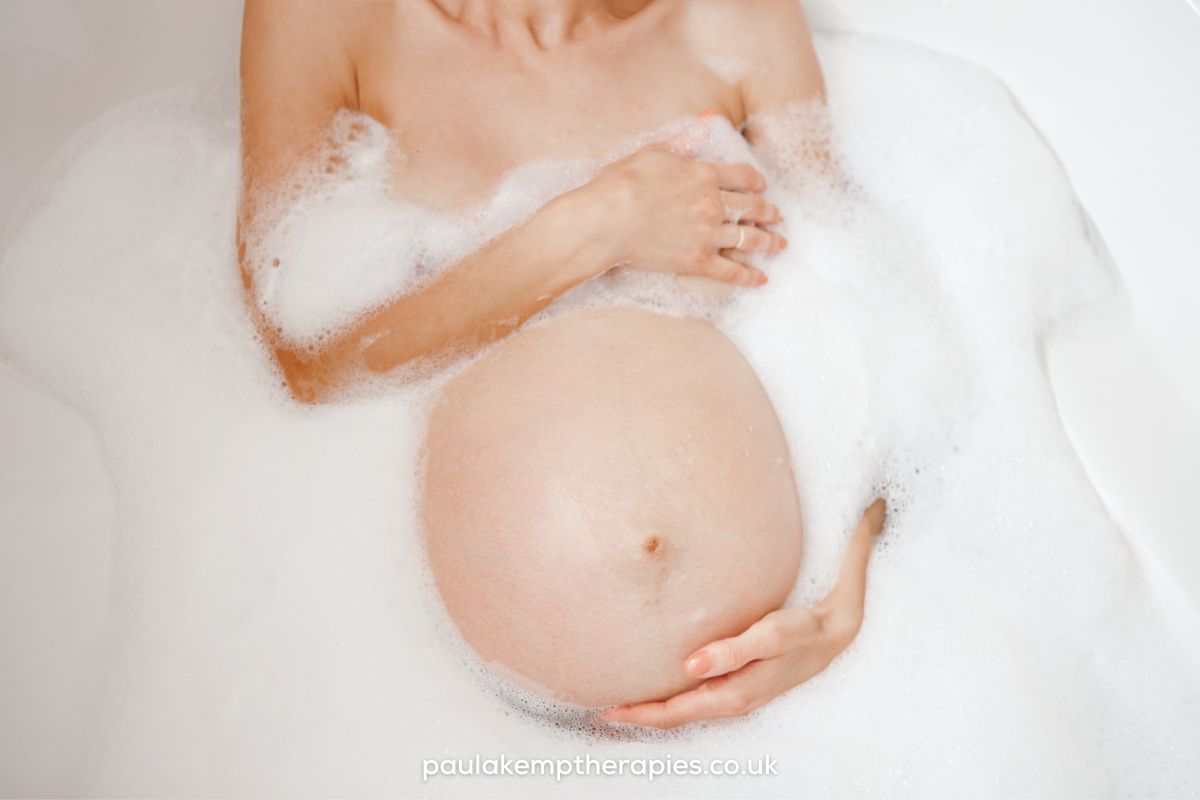
1. Reduces Swelling (Especially in the Feet and Ankles)
Let’s be honest — swollen feet are practically a rite of passage in late pregnancy. But just because they’re common doesn’t mean you have to suffer through them.
Epsom salt can help draw excess fluid out of your tissues, which means your ankles and legs may feel lighter and less puffy. I always say, it’s like giving your feet a little sigh of relief.
Top tip: Soak just your feet in a bowl or basin of warm water with a handful of Epsom salt if you don’t fancy a full bath.
2. Soothes Muscle Aches and Joint Pain
Growing a baby is no small task — your muscles, ligaments, and joints are constantly adjusting. That backache, pelvic pressure, or hip tightness? It’s all part of the deal.
A warm Epsom salt bath can ease muscular tension, reduce inflammation, and help you feel more mobile and supported. Think of it like a warm hug for your body. Bonus: it can work beautifully alongside pregnancy massage or yoga stretches.
3. Eases Constipation and Bloating
I know, not the most glamorous topic. But constipation is incredibly common in pregnancy — and no one talks about it enough.
While Epsom salt internally is a known laxative (please don’t drink it unless your doctor tells you to!), bathing in it may also help relax your abdominal muscles and encourage things to start moving. Even just relaxing in the warm water can give your digestive system a chance to calm down.
4. Improves Sleep (Especially When Magnesium Levels Are Low)
Pregnancy sleep can be a bit… chaotic. You’re either too hot, too uncomfortable, or being used as a human trampoline by your unborn child at 2am.
A relaxing bath with Epsom salt can help calm the nervous system, ease restless legs, and promote deeper sleep. Magnesium supports melatonin production too — your body’s natural sleep hormone. Ever found you sleep better after a bath? That’s no coincidence.
Related Post: Sleep Like a Baby: How Prenatal Massage Helps Beat Insomnia
5. Reduces Stress and Calms Anxiety
Let’s not underestimate this one. Pregnancy can be an emotional rollercoaster. Between hormone shifts, life changes, and “What if I forget how to swaddle?” moments, stress can sneak in fast.
Magnesium supports your nervous system, helps regulate cortisol (your stress hormone), and plays a role in mood balance. The warm water itself can also activate your parasympathetic nervous system — that’s your “rest and digest” mode. Basically: instant calm.
Feeling anxious or overwhelmed? Try adding a few drops of lavender essential oil to your bath. It’s like a little spa moment, just for you.
Is It Safe to Use Epsom Salt During Pregnancy?
In most cases — yes, absolutely. Epsom salt baths are considered safe for pregnant women, as long as you follow a few simple guidelines:
Safety Tips:
- Use pure, unscented Epsom salt (no added essential oils or perfumes unless you’ve checked they’re safe in pregnancy).
- Stick to warm, not hot water — aim for no higher than 37°C. If your skin goes red or you feel overheated, it’s too hot.
- Limit bath time to 12–15 minutes to avoid overheating or dehydration.
- Stay hydrated before and after your bath.
- Avoid if you have pre-eclampsia, gestational diabetes, or any other high-risk concerns — always chat with your midwife or GP if you’re unsure.
How to Use Epsom Salt Safely During Pregnancy
So you’re ready to try it — fab! Here’s how to set yourself up for a blissful, bump-friendly soak:
Basic Recipe:
- 1–2 cups of Epsom salt in a warm (not hot) bath.
- Soak for no longer than 15–20 minutes.
- Rinse off with fresh water afterwards and moisturise if your skin feels dry.
No bath? No problem. A foot soak works wonders too. Use ½ cup of Epsom salt in a basin of warm water and soak your feet while watching your favourite show. Easy win.
When to Avoid Epsom Salt Baths
As soothing as they are, there are a few times when it’s best to skip the soak:
- If you have open wounds, skin conditions, or infections
- If you’ve been advised to avoid baths or certain products by your midwife or doctor
- If you feel faint, dizzy, or unwell while in the bath — always get out and rest
And if you’re in doubt, just ask. It’s always better to get that reassurance.
Real Talk: What I’ve Seen with My Clients
Here’s the honest bit — I’ve worked with so many pregnant women who’ve found Epsom salt baths to be an absolute lifesaver. One client even told me her weekly soak was the only time she didn’t feel like a balloon with legs. 😂
It’s simple, gentle, and gives you a little pocket of peace when everything else feels overwhelming. And let’s face it — those moments are gold when you’re growing a human.
My Favourite Epsom Salt Pairings for Pregnancy
If you’re ready to level up your bath ritual, here are a few safe and soothing combos I love:
1. Epsom Salt + Lavender Oil
Great for: Stress, sleep, anxiety
Tip: Add 2–3 drops of pure lavender essential oil to a tablespoon of carrier oil (like sweet almond) before adding to the bath.
2. Epsom Salt + Oatmeal
Great for: Itchy, dry, or sensitive skin
Tip: Pop a handful of oats in a muslin bag or sock and let it steep in the water like tea — your skin will love it.
3. Epsom Salt + Rose or Chamomile Petals
Great for: A little luxury and self-love
Tip: Add a sprinkle of dried petals for a gentle, calming effect. It’s not necessary, but feels beautifully nurturing.
Pregnancy is a time to nurture yourself too — not just the bump.
Related Post: 20 Essential Oils Safe for Pregnancy and Breastfeeding
Where to Buy Epsom Salt (and What to Look For)
Not all Epsom salt is created equal — look for these when choosing:
- Pure, pharmaceutical grade (this ensures it’s safe for skin use)
- No added fragrance or colour
- Sold in a resealable bag or container to avoid clumping
I personally love the Westlab Epsom Salt range — affordable, no added nonsense, and available at most pharmacies or online at Amazon.